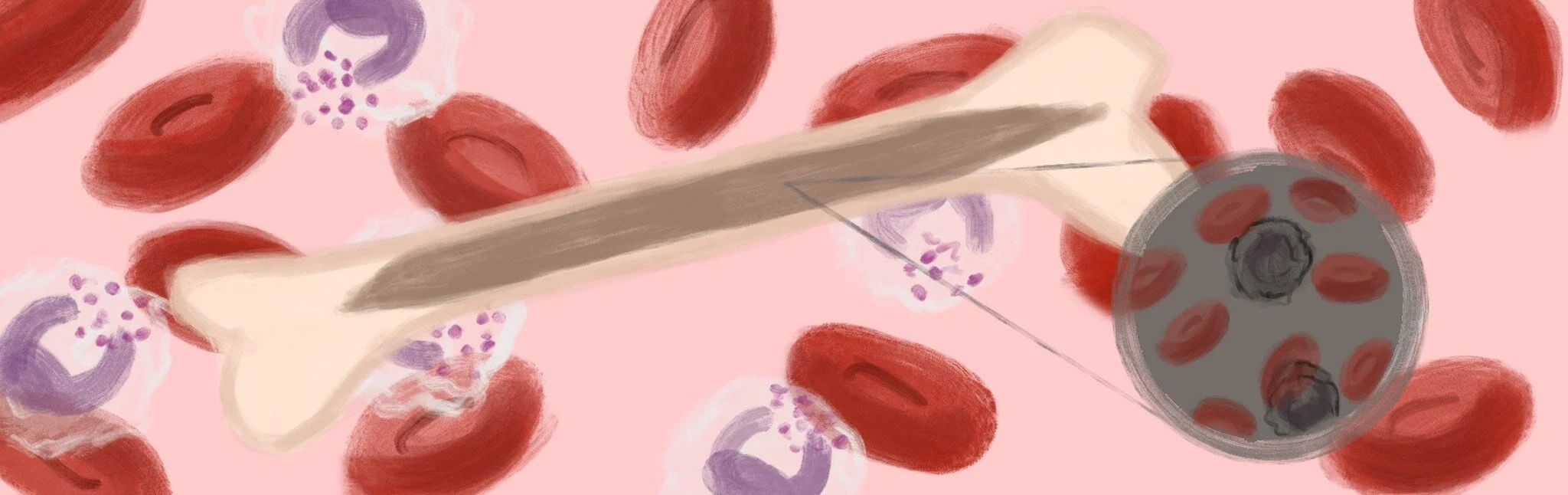
Leukemia: it’s the most common cancer in children, and despite decades of research, it has relatively low survival rates. In one of the main forms of leukemia, called acute myeloid leukemia (AML), 40% to 60% of children do not survive after treatment.1
This said, a rare subtype of AML has a much higher survival rate.2 Acute megakaryoblastic leukemia, or AMKL, is a rare subtype of AML that occurs in less than one in a million people.3 It accounts for roughly 4% to 15% of AML cases in children and can be further subdivided into two groups: patients without Down syndrome (non–DS-AMKL) and patients who have both Down syndrome and AMKL (DS-AMKL).2,4
Children with Down syndrome (otherwise known as Trisomy 21) have a unique genetic profile with an extra third copy of chromosome 214 and have a 500 times greater risk of developing AMKL compared to the general population.3,5 About 10% of newborns with DS develop a transient leukemia that usually resolves on its own within 3 months, but approximately 20% to 30% of transient leukemia patients later develop AMKL.6,7,8
In both transient leukemia and AMKL, immature blood cells called megakaryoblasts reproduce uncontrollably causing damage to many tissues. Patients can undergo chemotherapy treatment to kill the cancerous megakaryocytic cells.8 Once all of the circulating cells are destroyed, the body’s own capacity for regeneration takes over: blood stem cells in the bone marrow divide to replenish the body with new healthy blood cells. Think of it like pruning the wilted leaves on your favourite house plant so the new healthy buds can flourish.
While the outcome for non–DS-AMKL patients has been generally poor,9,10 for many DS-AMKL patients, chemotherapy is successful with a recent study reporting a 5-year overall survival of over 90%.8 Researchers believe these patients have a higher survival rate because the cancerous cells in DS-AMKL are more susceptible to chemotherapy, which in general means doctors can use a lower dose, reducing the overall toxic effects of the therapy. Unfortunately, for a subset of patients, the leukemia returns stronger and more deadly and there are fewer treatment options. The same study reported a 5-year overall survival of only 34% for patients whose leukemia returned.8 Thus, there is a need to better understand DS-AMKL to create better treatments and improve patient outcomes, especially for patients with recurring leukemia.
Scientists at the Princess Margaret Cancer Centre in Toronto are working to answer some key questions about the disease, including how the genetic profile of DS contributes to transient leukemia and AMKL.
I recently spoke to Dr. Elvin Wagenblast, a postdoctoral fellow in Dr. John Dick’s laboratory who is leading the research: “We’re trying to pinpoint the exact cell population where the leukemic transformation happens. There are many indications that the disease starts in long-term blood stem cells, especially in DS-AMKL,” he said.
Dr. Wagenblast explained that in transient leukemia the circulating cancerous cells have an error in a gene called GATA1, and that, while in most cases the transient leukemia in a newborn patient goes away by itself, if a patient later develops DS-AMKL, those new cancerous cells will have the same exact GATA1 error that was observed during the transient leukemia. “This suggests that the transient leukemia and the full-blown AMKL originated from the same stem cell,” emphasized Dr.Wagenblast.
In fact, the cancerous cells from almost all DS-AMKL patients have been found to have errors in the GATA1 gene.5,11,12 “We want to know why there is a predisposition for leukemia, and how an extra copy of chromosome 21 and the GATA1 mutation induces the transient leukemia and progresses toward AMKL,” said Wagenblast. One hypothesis is that the extra copy of genes on chromosome 21 allows for GATA1 gene mutations to occur and persist in a patient’s blood stem cells.4 The error in GATA1 is then passed on to all of the blood cells produced by the original mutated stem cell.
To study why the co-occurrence of DS and GATA1 mutations leads to AMKL, Dr. Wagenblast has developed a unique system to model the disease.13 First, he isolates long-term blood stem cells from healthy patients with Down syndrome. Then, he uses gene editing technology called CRISPR/Cas9 to introduce a GATA1 error in the long-term blood stem cells, which mimics the GATA1 mutations usually observed in DS-AMKL cells.13 “It took around 2 years to figure out how to introduce CRISPR into these stem cells,” said Dr. Wagenblast. “We use electroporation—an electric pulse that opens up pores in the long-term stem cells so the CRISPR protein plus the gRNAs can enter the cells.”
Next, these gene-edited cells are transplanted into mice without immune systems or blood cells for up to 20 to 24 weeks. “By going up to 20 weeks, we know that the blood cells in the mice are all derived from long-term blood stem cells, as the short-term stem cells die after 12 weeks,” Dr. Wagenblast explained. In the mice, the long-term blood stem cells travel to the bone marrow and produce blood cells.
“Based on the mutation pattern that CRISPR introduces, that mutation is unique, and we can basically say that all the blood cells in the mice have originated from one or two of the transplanted stem cells.” In this way, Dr. Wagenblast can study how different GATA1 errors affect the stem cells’ ability to produce different populations of blood cells, including megakaryoblasts.
So far, Dr. Wagenblast has found that simply introducing GATA1 mutations into blood stem cells collected from healthy children with DS produces a small imbalance in blood cell populations similar to transient leukemia in the mice, but not full-blown AMKL. “In order to model the progression from transient leukemia to AMKL, we introduced a second mutation in the STAG2 gene, which is one of the most frequently mutated genes in AMKL,” said Dr. Wagenblast. “Once you have both mutations, you get AMKL.”
To prove the mice really developed DS-AMKL, Dr. Wagenblast harvests the leukemic stem cells from a transplanted mouse and transplants them again into a second mouse. Because leukemic stem cells have a much higher capacity to propagate when transplanted into a second mouse compared to normal stem cells, if the second mouse also develops leukemia, scientists then know that they have a true case of DS-AMKL.
“This mouse model is still artificial but using human samples in mice is as close as we can get to model the disease,” said Dr. Wagenblast. With this model, scientists can start to examine which gene pathways are affected in DS-AMKL to identify potential therapeutic targets that could work on the cancerous cells: “If we see that one pathway is dysregulated, we could target that pathway to kill those specific dysregulated stem cells,” said Dr. Wagenblast.
“Right now, there’s no treatment for transient leukemia. Once doctors diagnose transient leukemia, these children are not usually treated unless it’s very severe, and in that case, it’s treated with chemotherapy; otherwise, there’s no treatment. Chemotherapy is quite toxic for DS patients, it really affects them,” emphasized Dr. Wagenblast, “so if we could find better treatments that are more specific that could target both transient leukemia and AMKL, that’d be great.”
Dr. Wagenblast explained that one potential avenue would be to try to eliminate the specific long-term blood stem cell that caused a patient’s transient leukemia, then the cell would not be around to acquire a STAG2 mutation and later progress to full-blown DS-AMKL. He sees a future where one day children with Down syndrome could be screened for mutations associated with AMKL and treated before they develop the full-blown disease. Although the genetic profile of DS-AMKL patients is unique, the insights gained from these studies could also help researchers develop treatments for other leukemias associated with pre-leukemic gene mutations.
Works Cited:
- http://www.sickkids.ca/Research/LRG/Children-with-leukemia/index.html
- Hama A, Yagasaki H, Takahashi Y, et al. Acute megakaryoblastic leukaemia (AMKL) in children: a comparison of AMKL with and without Down syndrome. British Journal of Haematology. 2008;140:552-561. doi:10.1111/j.1365-2141.2007.06971.x https://onlinelibrary.wiley.com/doi/full/10.1111/j.1365-2141.2007.06971.x
- https://www.orpha.net/consor/cgi-bin/Disease_Search.php?lng=EN&data_id=8563&Disease_Disease_Search_diseaseGroup=AMKL&Disease_Disease_Search_diseaseType=Pat&Disease(s)/group%20of%20diseases=Acute-megakaryoblastic-leukemia&title=Acute%20megakaryoblastic%20leukemia&search=Disease_Search_Simple
- Gruber TA, Downing JR. The biology of pediatric acute megakaryoblastic leukemia. Blood. 2015;126(8):943–949. doi:10.1182/blood-2015-05-567859 https://www.ncbi.nlm.nih.gov/pmc/articles/PMC4551356/
- Hitzler JK, Zipursky A. Origins of leukaemia in children with Down syndrome. Nat Rev Cancer. 2005;5:11–20. doi:10.1038/nrc1525 https://www.nature.com/articles/nrc1525
- Zipursky A, Poon A, Doyle J. Leukemia in Down syndrome: a review. Pediatr Hematol Oncol. 1992;9:139-149. doi: 10.3109/08880019209018329 https://pubmed.ncbi.nlm.nih.gov/1388043/
- Homans AC, Verissimo AM, Vlacha V. Transient abnormal myelopoiesis of infancy associated with trisomy 21. Am J Pediatr Hematol Oncol. 1993;15:392-399. https://europepmc.org/article/med/8214361
- Taub JW, Berman JN, Hitzler JK, et al. Improved outcomes for myeloid leukemia of Down syndrome: a report from the Children's Oncology Group AAML0431 trial. Blood. 2017;129(25):3304–3313. doi:10.1182/blood-2017-01-764324 https://ashpublications.org/blood/article-lookup/doi/10.1182/blood-2017-01-764324
- Athale UH, Razzouk BI, Raimondi SC, et al. Biology and outcome of childhood acute megakaryoblastic leukemia: a single institution’s experience. Blood. 2001;97:3727–3732. doi.org/10.1182/blood.V97.12.3727 https://ashpublications.org/blood/article-lookup/doi/10.1182/blood.v97.12.3727
- Ribeiro RC, Oliveira MSP, Fairclough D, et al. Acute Megakaryoblastic Leukemia in Children and Adolescents: A Retrospective Analysis of 24 Cases. Leukemia & Lymphoma. 1993;10:4-5:299-306. doi: 10.3109/10428199309148552 https://www.tandfonline.com/doi/abs/10.3109/10428199309148552
- Wechsler J, Greene M, McDevitt M, et al. Acquired mutations in GATA1 in the megakaryoblastic leukemia of Down syndrome. Nat Genet 2002;32:148–152. doi:10.1038/ng955 https://www.nature.com/articles/ng955z#Sec1
- Hitzler JK, Cheung J, Li Y, et al. GATA1 mutations in transient leukemia and acute megakaryoblastic leukemia of Down syndrome. Blood 2003;101(11):4301–4304. doi: https://doi.org/10.1182/blood-2003-01-0013 https://ashpublications.org/blood/article-lookup/doi/10.1182/blood-2003-01-0013
- Wagenblast E, Azkanaz M, Smith SA, et al. Functional profiling of single CRISPR/Cas9-edited human long-term hematopoietic stem cells. Nat Commun. 2019;10:4730. doi:10.1038/s41467-019-12726-0 https://www.nature.com/articles/s41467-019-12726-0
Cite This Article:
Bergeret M. A new model for a rare form of acute myeloid leukemia. Rare Disease Review. July 2020.